Tunings
- About OpenD - String
Gauges - How to tune - List of Tunings |
||||||||||||||||||||||||||||||||||||||||||||||||||||||||||||||||||||||||||||||||||||||||||||||||||||||||||||||||||
Standard tuning for a regular 6-string guitar is EADGBE, but guitars played lap-style are tuned many different ways, often to an open chord shape. Some
tunings are simply higher or lower versions of the same tuning, for
example, openE is the same "shape" as openD, but higher. Some
tunings are considered to relate more to particular styles of music
, some are better for solo playing, while others suit playing alongside
an accompanyment, but nothing is set in stone... If
you're just starting out then it's probably best to stick with one
tuning for a while, so you can concentrate better on learning the
mechanics of playing, holding the bar and picking and blocking techniques. For a very informative article about open tunings on Bob Brozman's website, click here.
|
||||||||||||||||||||||||||||||||||||||||||||||||||||||||||||||||||||||||||||||||||||||||||||||||||||||||||||||||||
|
This site was initially aimed at addressing the lack of available online TABs & instructional material for Open-D tuning, which is (low to high, DADF#AD) ( Also known as "Vestapol" ) It's a nice tuning if you've ever played a regular guitar before because it's basically the familiar open-E chord shape, shifted down some.
The
intervals of strings from low to high in this chord go: So
when you strum the open strings you get a lovely D Major chord. This "shape" of
tuning can be very versatile and is nice for solo players who want
a nice full sound. From
open-D(Major) you can also easily tune to open-D minor(DADFAD) and
open-Dsus(DADGAD) without having to change any strings. If
you become familiar with open D major (Vestapol), and then try Open
G, If
you play dobro then many licks that work on the top 4 strings
on regular dobro tuning (GBDGBD) will work on the middle 4 strings
in open D or open E tuning.
|
||||||||||||||||||||||||||||||||||||||||||||||||||||||||||||||||||||||||||||||||||||||||||||||||||||||||||||||||||
|
When changing tunings it's best to check that your string gauges can handle it. There's a bit of leeway here, but too far out and you can run into problems, either with strings being too slack & sounding "dead" with no sustain & unstable pitch, or too tight which risks snapping the string or potentially damaging the guitar! Here's a really useful String Gauge Chart with suggested gauges for each pitch. The
ranges on this chart are for guitars with a scale-length of 22" to
24.5"...
|
||||||||||||||||||||||||||||||||||||||||||||||||||||||||||||||||||||||||||||||||||||||||||||||||||||||||||||||||||
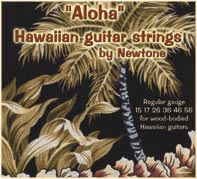
You'll probably settle on a gauge ( & Brand/Manufacturer ) that you prefer after some experimentation, but for Open-D on a regular-scale-length Hollowneck, you can't really go wrong with these:
|
|
It's
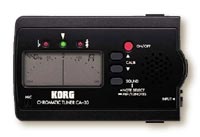
good to get a proper tuner, a "chromatic" one is best.
|
Be
aware that if you use an electronic tuner, you may want to flatten
that 3rd by around 10 cents, to adjust out that compensation imposed
by the "Equal Temperament Tuning System" which is required
on fretted instruments and keyboards to enable them to be "in
tune enough" to play in any key. |
Relative
tuning ("by ear") can be a very useful thing to master,
( personally I'd consider it essential .) If you
have a pitch-pipe for regular guitar you can use the 4th string pipe
for your D referance tone & tune your 4th string to match. You can use the "tuning" dialog in PowerTab for referance tones too. |
It's
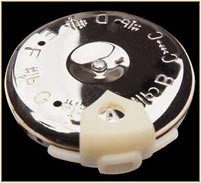
good to also have a pitch-pipe stashed in your gigbag or guitar case
as an emergency referance tone to tune to.
Download
tuner software here |
Relative-tuning your guitar to open D Tuning
to open-D is pretty easy once you've got a referance tone for your
"D". 6th
string fret7 = open 5th string
|
|
Tunings below listed low-to-high
D tunings DADF#AD = Open D Major "Vestapol" DADFAD = Open D minor DADDAD = Open D unison DADGAD = D-sus 'DADGAD' DADFAC = Dm7 BDF#ABD = D6 DGCFAD = a Ben Harper tuning, apparently! |
G tunings DGDGBD = Open G major (1) "Spanish", "Taro Patch" or "Low-Bass G" DBGDGD = Open G(2) DGDGBbD = Open Gminor(1) GBbDGBbD = Open Gminor(2) DGDGCD = G-sus DGDGGD = Open G unison GBDGBD = Open G, classic Bluegrass 'Dobro' tuning |
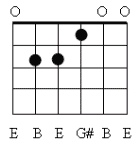
E tunings EBEG#BE = Open E(1) EBEGBE = Open Em EBEEBE = Open E unison EAEG#BE = Open E(2) EBEG#C#E = Open E6(1) EBEG#BC# = Open E6(2) G#EC#BG#E = Open E6(3) DEG#BC#E = Open E13 |
A tunings EAC#EAE = Open A(1) EAEAC#E = Open A(2) "Low -Bass A" Hawaiian EAEACE = Open Am(1) EACEAE = Open Am(2) C#EF#AC#E = Open A6 |
C tunings CGCGCE = Open C GCGCEG = Open C variant CGCGCEb = C minor CEGACE = Open c6
A John Fahey favourite: C#F#C#F#A#C# |
A
worthy addition to any steel guitarist's library
is the excellent book by Andy Volk:
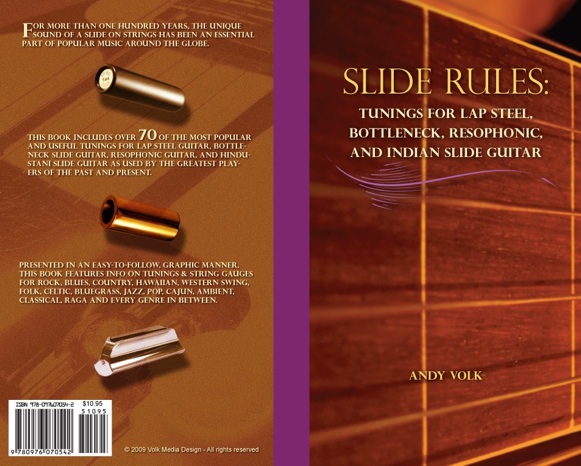
click here to see more!